“I Thought Medicare Was Paying for My Walker.”
A gentleman from right here in Pace stopped by my office not long ago with a Medicare Summary Notice in his hand.
“I don’t understand this,” he said. “My doctor told me Medicare would cover my walker.”
His doctor wasn’t wrong. But there was one important detail no one had explained: Medicare was willing to help pay for the walker, but not necessarily all of it. After his deductible and coinsurance, he still owed money. Even worse, the supplier he chose didn’t fully explain how Medicare billing worked, leaving him surprised when the bill arrived.
Unfortunately, I hear stories like this every year from folks across Pace, Milton, Pensacola, Jay, and Gulf Breeze. Many Medicare beneficiaries assume that if a doctor prescribes medical equipment, Medicare automatically pays the full cost. In reality, Medicare has very specific rules about what equipment qualifies, how it must be ordered, who supplies it, and what portion you may still have to pay. Understanding those rules before you need medical equipment can save you hundreds, or even thousands, of dollars.
What Is Durable Medical Equipment?
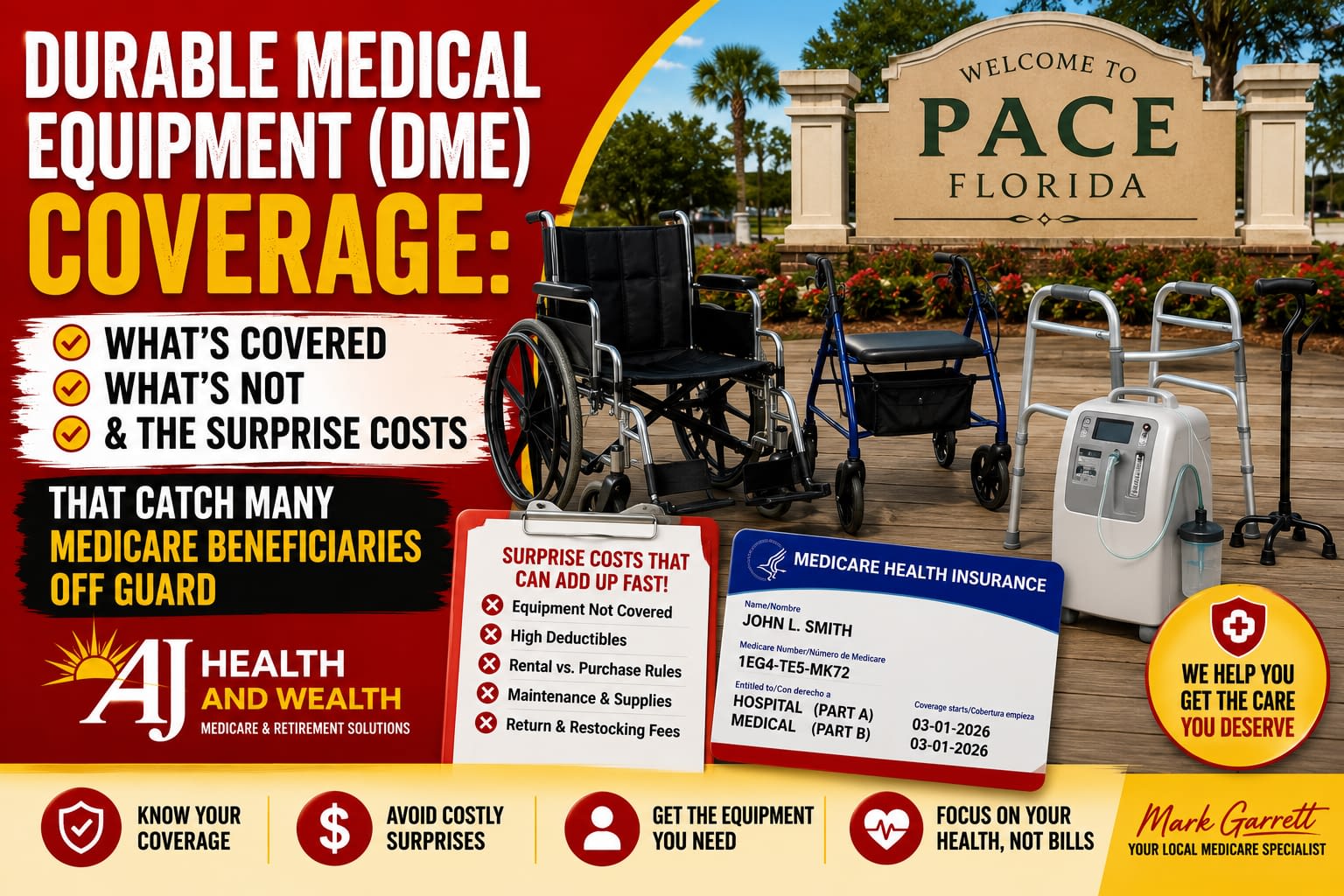
Medicare refers to certain medically necessary medical devices as Durable Medical Equipment, commonly called DME. To qualify under Medicare Part B, equipment generally must:
- Be durable enough for repeated use
- Serve a medical purpose
- Be appropriate for use in the home
- Usually not be useful to someone who isn’t sick or injured
- Be prescribed by a healthcare provider treating your condition
- Be supplied by a Medicare-enrolled supplier
If an item doesn’t meet Medicare’s definition of durable medical equipment, it generally won’t be covered under Part B.
Common Types of Equipment Medicare May Cover
One of the biggest misconceptions is believing DME only includes wheelchairs. In reality, Medicare may help cover a wide variety of medically necessary equipment.
Mobility Equipment
- Walkers
- Standard wheelchairs
- Power wheelchairs (when medically necessary)
- Scooters (when eligibility requirements are met)
- Canes and crutches in certain situations
Coverage depends on your medical condition and whether the equipment is considered medically necessary for use inside your home.
Hospital Beds
If your physician determines that a standard bed cannot safely meet your medical needs, Medicare may help cover certain hospital beds, including situations involving frequent position changes, special body positioning, or certain chronic medical conditions. Not every adjustable bed sold at a furniture store qualifies simply because it’s adjustable. Medical necessity is the key.
Oxygen Equipment
For beneficiaries with qualifying medical conditions and documented testing showing low blood oxygen levels, Medicare may cover oxygen equipment, oxygen concentrators, portable oxygen equipment in qualifying situations, and oxygen supplies. Specific medical criteria must be met before coverage is approved.
CPAP Machines
Sleep apnea affects millions of Americans. If you’re diagnosed with obstructive sleep apnea and meet Medicare’s coverage requirements, Medicare Part B may help cover CPAP machines and certain replacement supplies, including tubing, masks, filters, and humidifier components. Continued coverage may depend on meeting Medicare’s compliance requirements during the initial treatment period.
Diabetic Equipment and Supplies
Depending on your circumstances, Medicare may also help cover certain diabetes-related durable medical equipment and supplies, including blood glucose monitors, continuous glucose monitors (for qualifying beneficiaries), lancets, test strips, and insulin pumps for qualifying individuals. Coverage varies depending on the specific equipment and your medical needs.
What Medicare Usually Does NOT Cover
This is where many beneficiaries become frustrated. Just because something improves comfort or quality of life doesn’t automatically mean Medicare considers it durable medical equipment. Items that are generally not covered include:
- Grab bars installed in bathrooms
- Stair lifts
- Bathroom remodeling
- Walk-in bathtubs
- Lift chairs (although the seat-lift mechanism may qualify in certain situations)
- Air conditioners
- Home modifications, including widening doorways or ramps built onto a home
- Comfort or luxury features added to equipment
I’ve had clients ask whether Medicare would help pay for remodeling a bathroom after knee surgery or installing a wheelchair ramp outside their home. Those improvements may be extremely helpful, but they’re generally not considered durable medical equipment under Medicare rules.
Medicare Doesn’t Automatically Buy Everything
Another area of confusion is ownership. Some equipment is purchased. Other equipment is rented. The decision isn’t made by the beneficiary; it’s determined by Medicare’s coverage rules for that particular type of equipment. For example, certain wheelchairs may be purchased, while oxygen equipment is commonly rented under Medicare’s payment rules. CPAP machines also have specific rental-to-purchase provisions that many beneficiaries don’t realize exist until after treatment begins. Knowing whether your equipment is rented or purchased can make a significant difference in your long-term costs and responsibilities.
Medicare Tip
Always ask your supplier one simple question before accepting any equipment:
“Does this supplier participate in Medicare and accept assignment?”
That one question can prevent many unexpected billing surprises. Suppliers who participate with Medicare agree to accept Medicare’s approved amount as payment in full, aside from your deductible and applicable coinsurance. Choosing a supplier that doesn’t accept assignment can sometimes result in higher out-of-pocket costs.
How Much Does Medicare Actually Pay?
One of the biggest misunderstandings about Durable Medical Equipment is assuming that “covered” means “free.” In most cases, that’s simply not how Medicare works. If your DME is covered under Medicare Part B, here’s what typically happens:
- Your provider determines the equipment is medically necessary
- Your doctor or other qualified healthcare provider writes an order
- You obtain the equipment from a Medicare-enrolled supplier
- Medicare approves the claim
- Medicare generally pays 80% of the Medicare-approved amount after you’ve met your annual Part B deductible ($283 in 2026)
- You’re generally responsible for the remaining 20% coinsurance, unless you have other coverage, such as a Medicare Supplement plan, that helps pay those costs
This is why someone may still receive a bill even though Medicare “covered” the equipment. It’s important to remember that Medicare pays based on its approved amount, not necessarily the supplier’s retail price.
Why Using the Right Supplier Matters
One of the easiest ways to create an unexpected bill is by using the wrong supplier. Not every company that sells medical equipment participates with Medicare in the same way. Before accepting equipment, ask these questions:
- Is this supplier enrolled in Medicare?
- Do you accept Medicare assignment?
- Will you bill Medicare directly?
- How much will I owe before I take the equipment home?
- Is there any monthly rental charge?
- Are there maintenance fees?
- Will replacement supplies be covered?
Taking five minutes to ask these questions can prevent weeks of frustration later, whether you’re in Pensacola, Gulf Breeze, or anywhere else in Northwest Florida.
Renting vs. Buying: Why It Matters
Many beneficiaries are surprised to learn they don’t always own the equipment Medicare helps pay for. Depending on Medicare’s rules, equipment may be purchased immediately, rented for a period of time, rented with ownership transferring after a specified payment period, or rented indefinitely while medically necessary.
For example, oxygen equipment often follows different payment rules than walkers or manual wheelchairs. CPAP machines also have specific rental and continued-use requirements before ownership transfers. If you move, change suppliers, or no longer need the equipment, whether you rent or own it affects what happens next. Always ask your supplier:
“Am I renting this equipment, or will I eventually own it?”
Replacement Equipment Isn’t Always Covered
Medical equipment wears out. Sometimes it’s damaged. Sometimes your medical condition changes. Many people assume Medicare will simply replace equipment whenever they ask. In reality, replacement depends on several factors, including whether the equipment has reached the end of its reasonable useful lifetime, whether it has been lost, stolen, or irreparably damaged, and whether your medical needs have changed enough to require different equipment. If your equipment simply becomes outdated or you want a newer model, Medicare generally won’t replace it for that reason alone.
The Surprise Costs I See Most Often
After helping Medicare beneficiaries since 2012, I’ve noticed the same surprises come up again and again.
Surprise #1: The 20% Coinsurance
People hear “Medicare covers it” and naturally assume there won’t be a bill. Then they receive an invoice for several hundred dollars. The equipment was covered, but their share of the Medicare-approved amount still applied.
Surprise #2: Accessories Aren’t Always Included
The base equipment may be covered. The upgraded cushion, deluxe controls, premium mattress, upgraded mask, or specialized accessories may not be. Ask for an itemized estimate before accepting delivery.
Surprise #3: Replacement Supplies Cost Money
CPAP users often discover this first. Masks, tubing, cushions, filters, and other supplies need periodic replacement. Medicare covers many replacement supplies when coverage requirements are met, but frequency limits apply and cost-sharing may still apply depending on your coverage.
Surprise #4: Medical Necessity Must Be Documented
Your doctor saying an item would “help” isn’t always enough. Medicare generally requires documentation showing the equipment is medically necessary according to its coverage criteria. Incomplete documentation can delay or even prevent coverage.
Surprise #5: Convenience Items Usually Aren’t Covered
Many products marketed to seniors improve comfort but don’t qualify as Durable Medical Equipment, including bathroom renovations, walk-in tubs, home elevators, stair lifts, luxury adjustable beds, home remodeling, and comfort upgrades. These purchases can be expensive, so it’s worth verifying coverage before making a commitment.
Mark’s Take
One of the best investments you can make isn’t buying better equipment, it’s spending fifteen minutes asking questions before accepting it. Too many people sign paperwork, take delivery, and only later discover they agreed to monthly rental charges, supplier rules, or coinsurance they didn’t expect. A quick conversation with your supplier, and if needed, with your Medicare advisor, can save a lot of frustration.
Frequently Asked Questions
Does Medicare cover a lift chair?
Original Medicare generally does not cover the chair itself. In some situations, Medicare may help cover the medically necessary seat-lift mechanism if specific coverage requirements are met.
Will Medicare pay for a wheelchair?
Yes, if it’s medically necessary and you meet Medicare’s coverage requirements. The type of wheelchair approved depends on your medical condition and documented needs.
Does Medicare cover a scooter?
Possibly. Medicare may cover a power-operated vehicle (scooter) when strict medical necessity requirements are met and it’s needed for mobility in your home.
Will Medicare pay for a hospital bed?
It may, if your physician documents that a hospital bed is medically necessary because a standard bed won’t safely meet your medical needs.
Does Medicare cover bathroom safety equipment?
Generally, no. Items such as grab bars, walk-in tubs, shower remodels, and most home modifications are not considered Durable Medical Equipment under Original Medicare.
Suggested Internal Links
- Do You Need to Change Your Medicare Plan Every Year?
- Medicare Advantage Appeals and Denials: What to Do When a Claim or Prior Authorization Is Denied
- Medicare Savings Programs & Extra Help: Hidden Benefits That Could Save Florida Seniors Thousands
The Bottom Line
Durable Medical Equipment can make an enormous difference in helping people remain independent, recover from illness, and safely manage chronic health conditions at home. The key is understanding that Medicare coverage isn’t just about what equipment you need, it’s also about why you need it, where you get it, and how Medicare’s payment rules apply. Before accepting any equipment:
- Confirm it’s medically necessary
- Use a Medicare-enrolled supplier
- Ask whether the supplier accepts assignment
- Understand whether you’re renting or buying
- Ask what your estimated out-of-pocket costs will be
- Review your Medicare Supplement or Medicare Advantage benefits to see whether they help reduce your share of the cost
Taking these steps now can help you avoid expensive surprises later.
How AJ Health & Wealth Can Help
As a licensed independent Medicare broker serving Escambia and Santa Rosa counties, including Pace, Milton, Pensacola, Jay, and Gulf Breeze, I’m always happy to help you understand how your Medicare coverage applies to Durable Medical Equipment before you receive the bill, at no cost to you.
| Need Medical Equipment and Not Sure What Medicare Will Cover? Ask before you accept delivery, not after the bill arrives. We can help you understand your coverage and estimated costs, free and no obligation. Call: (850) 316-4378 Schedule Online: Click Here |
AJ Health and Wealth is not connected with the Federal Medicare program. By contacting this number, you will be connected with a licensed insurance agent. We do not offer every plan available in your area. Any information we provide is limited to those plans we do offer in your area. Please contact Medicare.gov, 1-800-MEDICARE, or your local State Health Insurance Program to get information on all of your options.